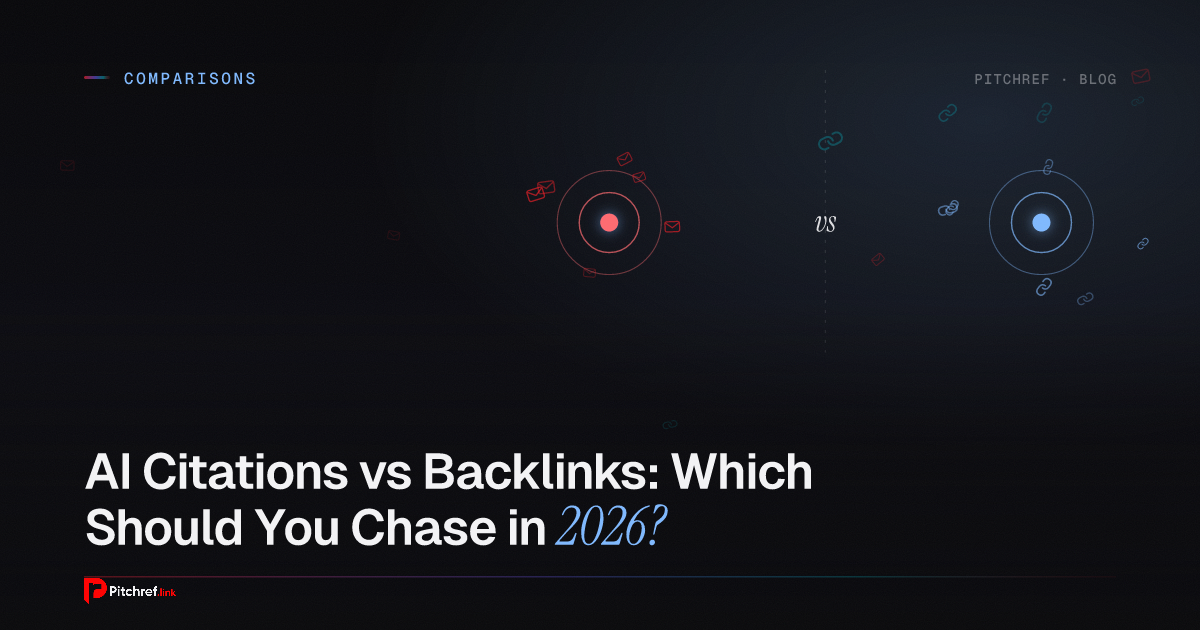
AI Citations vs Backlinks: Which Should You Chase in 2026?
One moves an algorithm, the other moves a buyer reading an answer. A clear-eyed comparison of the two currencies of visibility, and how to invest between them.
On this page
Every visibility budget now faces a fork: put the next hour into earning backlinks (the currency of search rankings) or AI citations (the currency of generated answers). They overlap. But they are not the same asset, and treating them as one leads to mispriced effort.
What each one actually buys you
| Backlink | AI citation | |
|---|---|---|
| What it is | A hyperlink from another site to yours | Your brand named as a source in a generated answer |
| Who it persuades | A ranking algorithm | The buyer, directly, mid-answer |
| Where it lives | Any indexable page | The handful of sources an engine consults per prompt |
| Decay | Slow; authority compounds | Refreshes as engines re-read the corpus |
| Measurement | Mature (DR, referring domains) | Young (citation share, prompt coverage) |
| Competition | Two decades of tooling and spam | Early; most categories still unclaimed |
The structural difference is the last row. Link building is a mature, crowded market where the easy wins were arbitraged away years ago. Citation space is young: the listicles and review pages that AI engines lean on are still deciding who belongs in them, and most of your competitors haven't noticed yet. That's the arbitrage.
The overlap, and the trap
Here's what keeps this from being a clean either/or: the pages that grant citations are often the pages that grant links. A product roundup that includes you usually links to you too. Well-executed outreach to aggregator pages pays twice.
The trap is running the old playbook unchanged and assuming the second payoff arrives automatically. It doesn't, for one reason: link-building targeting optimizes for authority metrics, citation targeting optimizes for answer presence. A DR-80 site that never appears in your category's answers is a fine link and a worthless citation. A modest listicle that three engines cite for your money prompt is citation gold that classic link tooling would deprioritize.
Same outreach muscle, different target list. We break down the mechanics of choosing cited targets in How AI Engines Pick Their Sources.
How to split the effort
A sane default for 2026:
- If buyers research you through AI answers (most software, services, and considered purchases): lead with citations. Map your prompts, win the cited pages, and collect the links those same placements produce as a bonus. The playbook is the full manual.
- If your demand is still overwhelmingly classic search (local, some ecommerce): keep link outreach primary, but claim your category's obvious citation targets now, while they're cheap.
- Either way, stop treating the two as separate campaigns. One target map, two scoring columns (answer presence and link value), and pitch once.
The honest bottom line
Backlinks are not dying. They remain a real signal and a real moat. But the marginal hour of outreach buys more in citation space right now, simply because fewer people are competing for it and the surface deciding purchases, the answer itself, is where citations live. Start with What Is GEO? if you're building the case internally. Start with the playbook if you're ready to run.